

How the Climate Adaptation Plan Came About
Grant ID, Project Title, and Project Duration
The climate adaptation plan was developed by the City of Hofheim’s Climate Protection Management team in collaboration with leading experts. The development of the plan’s content was also supported by numerous specialists from the city administration, local stakeholders, and representatives of Hofheim-based initiatives and political bodies. The development of the strategy was funded by the Federal Ministry for the Environment, Nature Conservation, and Nuclear Safety.
Project title: “ANK-DAS-A.1: Development of a Strategy for Sustainable Climate Adaptation and Natural Climate Protection for the County Seat of Hofheim am Taunus.”
Grant Reference Number: 67DAAN0511
Project duration: June 1, 2024, to November 30, 2026
Hofheim is adapting to climate change!
Kick-off event
The city of Hofheim is currently developing a climate adaptation concept. Anyone who wanted to find out more or contribute their own ideas was invited to the kick-off event on April 28, 2025 in the town hall. On this evening, all interested parties had the opportunity to get to know the project participants and find out about the challenges and opportunities of climate change. In addition, an interactive workshop section was used to collect already implemented and desirable adaptation measures for Hofheim.
In his welcoming address, First City Councillor Daniel Philipp made it clear that the effects of climate change will not stop at the city of Hofheim. Heat, heavy rainfall and longer periods of drought pose growing challenges for the city's infrastructure as well as the health and well-being of the population. This is why systematic climate adaptation is so important.
The climate adaptation concept will help to identify risks at an early stage, develop suitable measures and strengthen the city's resilience to climatic changes. The aim is to prepare the district town for climate change and preserve a liveable city for current and future generations.
The integrated climate adaptation concept
All information on funding
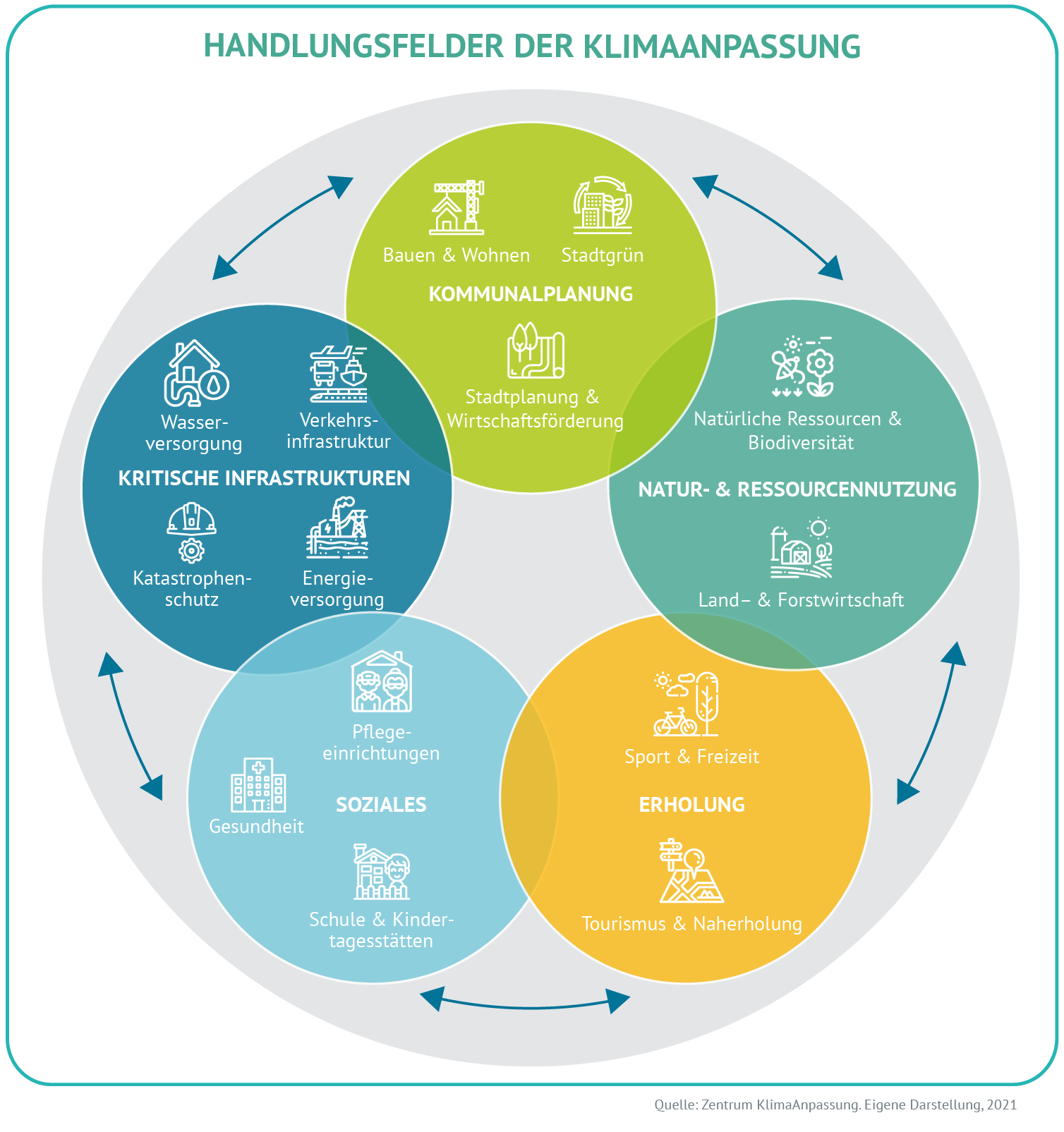
The plan is intended to firmly establish climate adaptation in Hofheim and serve as a planning tool and strategic basis for decision-making regarding future measures. The focus is on developing a comprehensive climate adaptation strategy with special attention to the intersections of “natural climate protection” and “strengthening biodiversity.” Particular attention is given to potential synergies and interactions with climate protection measures.
The development of the climate adaptation concept is funded by the Federal Ministry for the Environment (BMUV) through the “Funding for Measures to Adapt to the Consequences of Climate Change.” The funding was initiated as part of the German Adaptation Strategy (DAS) to climate change as one of many measures to establish integrated, sustainable climate adaptation management at the municipal level and thus strengthen self-reliance at the regional and local levels.
With this climate adaptation concept, the district town of Hofheim am Taunus is responding to the need to adapt to the local impacts of climate change and to proactively address the impending changes.
Further information on this topic can be found at the following links:
Climate adaptation measures
For a cooler and greener Hofheim
The well thought-out, near-natural handling of rainwater and the (re-)greening of areas are important measures that need to be taken in the short term. The preservation, upgrading and creation of new green and blue infrastructure (street trees, parks, roof and façade planting, infiltration systems, ponds and wetlands) enables, among other things, the cooling of urban air and makes an important contribution to improving the microclimate and urban climate. The creation of additional green and blue spaces creates places worth living in, which serve both to improve the quality of life and living conditions for citizens and to promote urban biodiversity.
A municipal rainwater utilization concept is currently being developed, which includes various rainwater management measures that contribute to climate adaptation and natural climate protection (including unsealing and re-greening measures and green roofs and façades). The measures to be implemented in the near future are currently still being examined.
In addition, the "Edible City of Hofheim" initiative, in collaboration with the administration, is planning to plant site-adapted and highly diverse "edible micro-forests" using the Miyawaki method (Japanese plant sociologist). Many different species of native fruit and nut trees, perennials and shrubs are planted on a small planting area of 100 square meters or more, contributing to natural climate protection and improving the quality of life in the city and promoting local biodiversity.